Overview
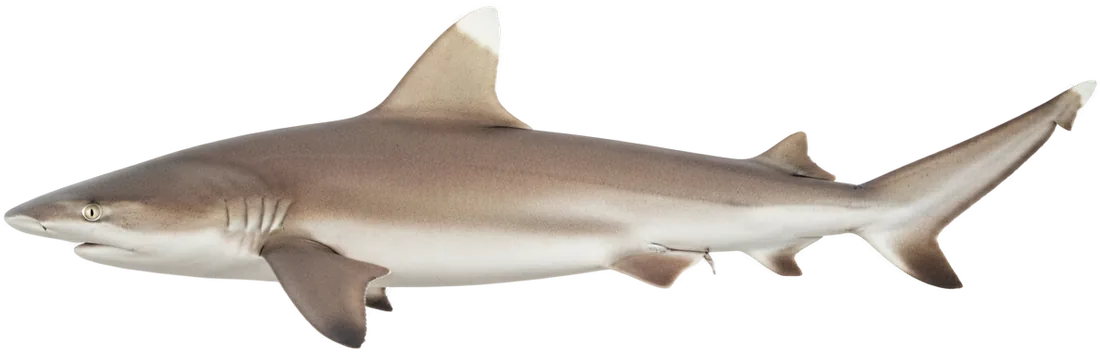
The whitetip reef shark is a slim, graceful shark named for the bright white tips on its dorsal and tail fins. Do not mix it up with the oceanic whitetip, which is a bigger open-ocean shark. This one is a true reef dweller with a slender body, a short blunt snout, and cat-like eyes. It is perfectly suited to slipping through narrow gaps in the coral in search of hidden prey.
By day, whitetip reef sharks are famously lazy, often resting in caves and under ledges, sometimes stacked together in groups. When night falls, they transform into active hunters, working their way through the reef and squeezing into cracks to flush out fish and other prey. They are one of the few sharks that can rest motionless on the bottom, and they are gentle and unbothered by divers, making them a beloved sight on tropical reefs.
| Where it lives | Coral reefs, caves, and ledges in clear tropical water |
| Range | Indian and Pacific Oceans, including the Red Sea and around many tropical islands |
| Adult size | Commonly 4 to 5.5 ft (1.2 to 1.7 m) |
| Diet | Reef fish, octopus, crabs, and lobsters hidden in the coral |
| Lifespan | Around 25 years or more |
| Depth or habitat | Reef bottoms and caves, often resting on the seafloor by day |
| Keep at home? | No, a wild reef shark, not a pet |
White-tipped and slender
The whitetip reef shark is easy to recognize by the snowy white tips on its first dorsal fin and the top of its tail. Its body is slim and gray, its snout is short and broad, and its eyes have an oval, cat-like shape. This slender shape lets it wriggle into tight spaces in the coral that chunkier sharks could never reach, which is a big advantage when hunting.
Lazy days, busy nights
During the daytime, whitetip reef sharks rest in caves, under ledges, or right on the sandy bottom, sometimes lying in relaxed piles with other whitetips. Like nurse sharks, they can breathe while lying still, so they do not need to keep swimming. When the sun goes down, they come alive and hunt through the night, using the cover of darkness to surprise sleeping fish.
Reef-crevice hunter
The whitetip is built to hunt inside the reef itself. Its slim body lets it force its way into narrow cracks and holes to reach prey like fish, octopus, crabs, and lobsters. Several whitetips will sometimes hunt the same coral head at once, and the reef can turn into a burst of activity as fish try to escape the sharks probing every crevice. This teamwork makes them very effective night hunters.
Are they dangerous?
Whitetip reef sharks are calm and pose very little threat to people. Divers regularly swim close to resting whitetips without any trouble, and the sharks generally ignore them. Bites are extremely rare and usually only happen if a shark is grabbed or if there is speared fish around that excites it. Left in peace, the whitetip is a gentle reef companion.
A homebody at risk
Whitetip reef sharks tend to stay on the same reef for years, which makes them easy for fishers to catch and slow to replace once their numbers drop. They are listed as vulnerable and are sensitive to reef damage and overfishing. Because they stick so close to home, protecting individual reefs can make a real difference for the whitetips that live there.
Fun facts
- White tips on the dorsal and tail fins give this shark its name.
- It can rest motionless on the seafloor because it can breathe without swimming.
- Whitetips hunt at night and rest in caves during the day, sometimes in piles.
- Its slim body lets it squeeze into cracks in the coral to reach hidden prey.
- Do not confuse it with the larger oceanic whitetip, which lives in the open sea.
Frequently asked questions
Is the whitetip reef shark dangerous?
No, it is calm and poses very little threat. Divers often swim right up to resting whitetips, and bites are extremely rare.
How big does it get?
It is a small shark, usually about 4 to 5.5 ft (1.2 to 1.7 m) long.
What does it eat?
Reef fish, octopus, crabs, and lobsters, which it flushes out of cracks in the coral, mostly at night.
Why does it rest on the bottom during the day?
Like nurse sharks, it can breathe while lying still, so it saves energy by resting by day and hunting at night.
Is it the same as an oceanic whitetip?
No. The whitetip reef shark is a small reef dweller, while the oceanic whitetip is a larger, separate shark that lives in the open ocean.