Overview
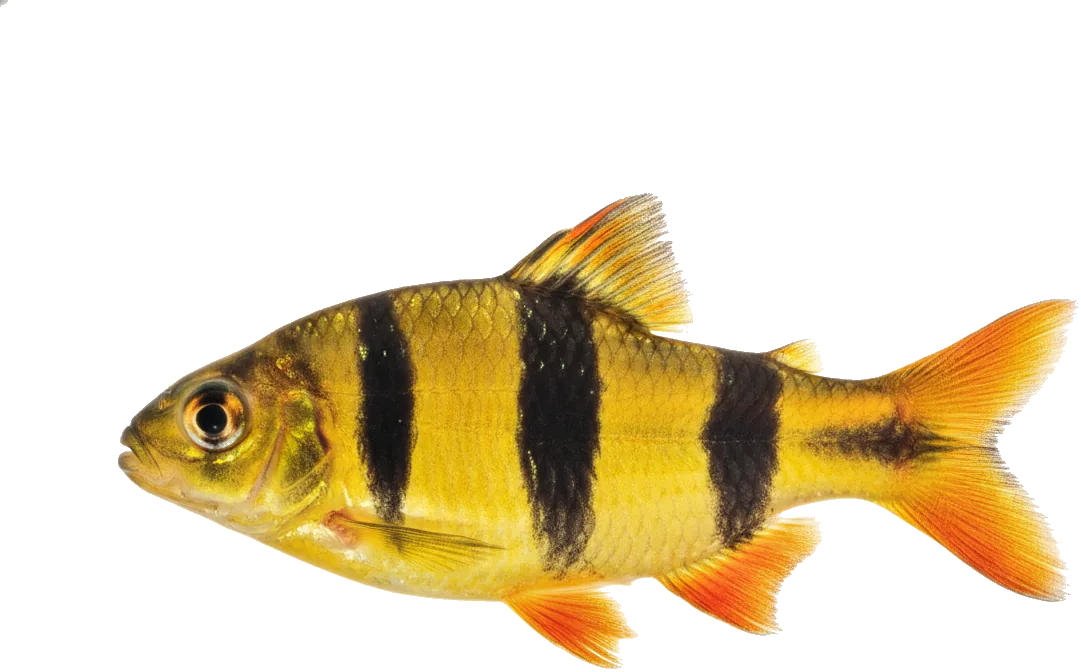
The tiger barb is a small, energetic fish named for the four bold black bands that cross its golden-orange body like tiger stripes. Its fins often carry flashes of bright red or orange, making a shoal of them a lively, eye-catching sight. They are fast, always on the move, and never sit still for long, which gives a planted tank a real sense of action.
Tiger barbs come from the rivers and streams of Southeast Asia, especially the islands of Borneo and Sumatra. They are famous, or maybe a little infamous, for being fin-nippers. Kept alone or in tiny numbers they turn their nipping on their tankmates. Kept in a proper large group they mostly chase and squabble among themselves, which keeps them busy and much better behaved.
| Care level | Easy to moderate |
| Adult size | 2.5 in (6 cm) |
| Lifespan | 5-7 years |
| Temperament | Active and semi-aggressive, a fin-nipper |
| Min. tank | 20 gal (75 L) |
| Temperature | 74-79 F (23-26 C) |
| pH | 6.0-7.5 |
| Diet | Flakes, pellets, and frozen or live foods |
| Schooling | Groups of 6 or more, ideally 8+ |
Safety in numbers
Tiger barbs must be kept in groups of at least six, and eight or more is better. In a big group they establish a lively pecking order among themselves and are far less likely to bother other fish.
The fin-nipping reputation
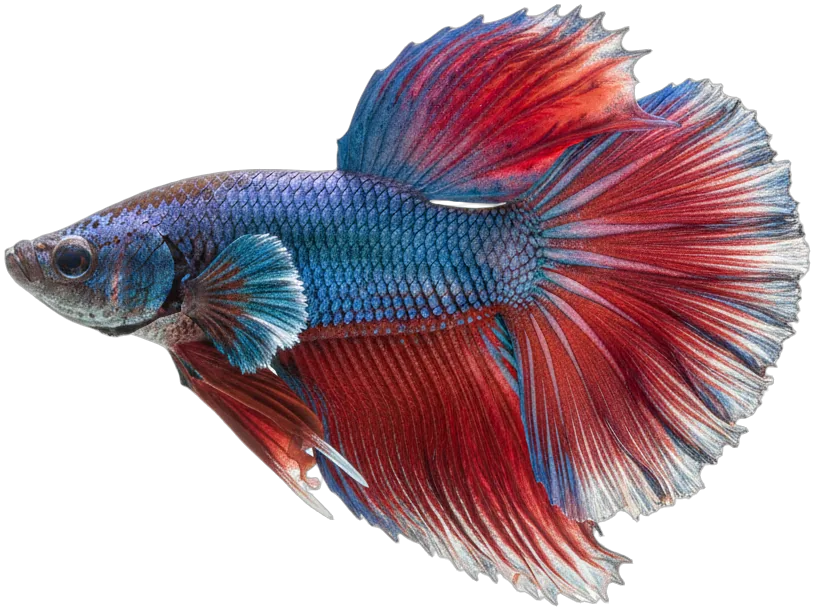
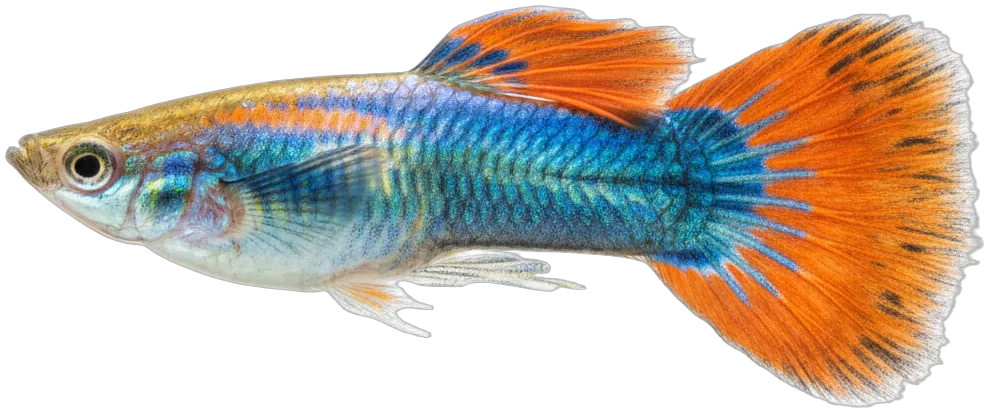
These barbs love to nip trailing fins, so avoid slow, long-finned tankmates like bettas and fancy guppies. Fast fish that can keep up make much safer companions.
Where it lives
It comes from the warm, flowing streams and rivers of Borneo, Sumatra, and nearby parts of Southeast Asia, in clear, plant-lined waters with a gentle current.
Color that changes
A tiger barb's colors brighten when it is confident and healthy, and the dominant fish in a group often shows the boldest orange. Stressed fish can look pale by comparison.
Keeping it happy
Give them a longer tank with open swimming lanes and some plants to break up sight lines. Good water quality and a big group keep them active, colorful, and out of trouble.
Fun facts
- It gets its name from the four dark tiger-like stripes across its body.
- It is a well-known fin-nipper, so it needs fast tankmates.
- Kept in groups of eight or more, it mostly squabbles among its own kind.
- Wild tiger barbs come from Borneo and Sumatra in Southeast Asia.
- Breeders have made green, albino, and other color forms of the tiger barb.
Frequently asked questions
Why do tiger barbs nip other fish?
It is part of their natural, active behavior. In too small a group they take it out on tankmates. A large group of eight or more redirects most of the nipping among themselves.
What fish should not live with tiger barbs?
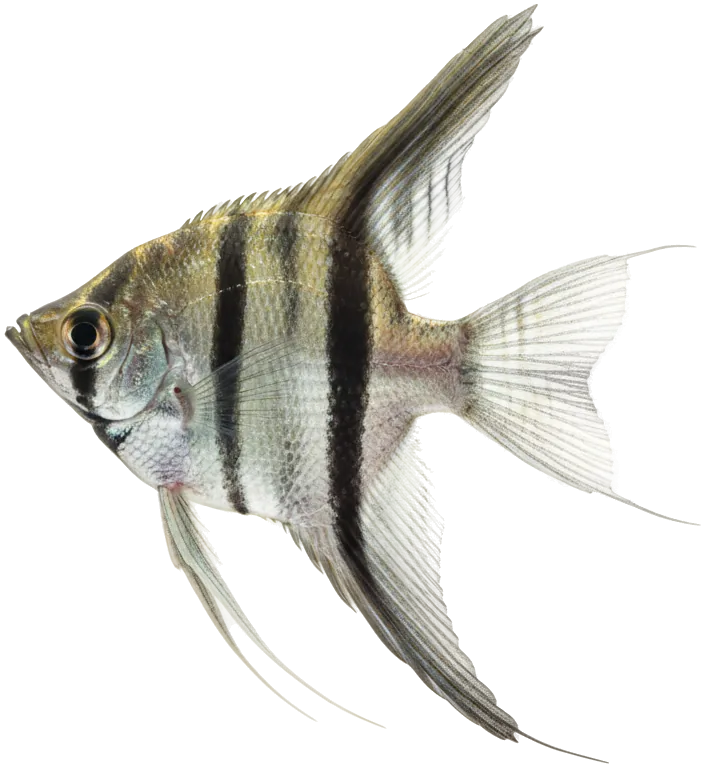
Slow fish with long, flowing fins, such as bettas, angelfish, and fancy guppies, are easy targets. Stick to fast, similar-sized tankmates instead.
How many tiger barbs should I keep?
At least six, and eight or more is even better. Bigger groups spread out their energy and make the fish calmer and more colorful.
Are they hard to care for?
No, they are hardy and easy to feed. The main thing to get right is keeping them in a proper-sized group in a roomy tank.