Overview
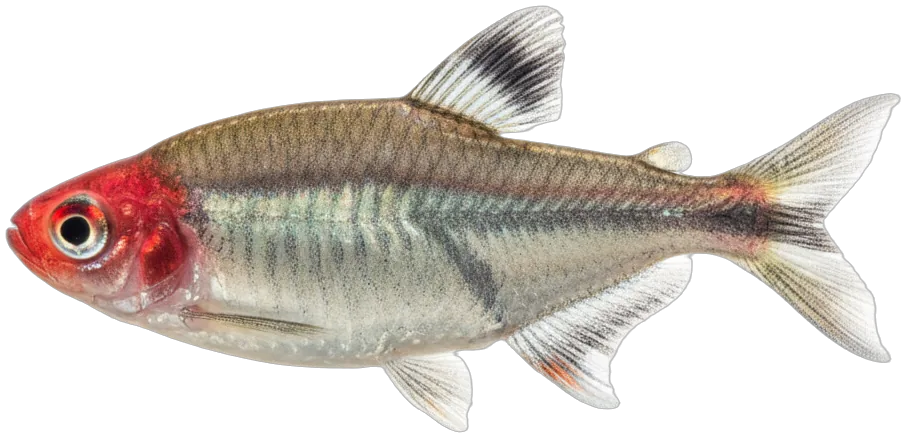
The rummynose tetra is famous for two things: a bright cherry-red nose and a tail striped in black and white like a checkerboard. It comes from the clear and blackwater rivers of the Amazon basin in South America. When a big group swims together, the rows of red noses and striped tails create one of the most striking sights in the whole fishkeeping hobby.
This tetra is one of the best schooling fish there is. A group moves so perfectly in sync that it looks like a single animal turning and flowing through the water. The red nose is also a handy health signal: when a rummynose tetra is happy and its water is clean, the nose glows bright red, but if the fish is stressed or the water is poor, the red color fades. That makes them a kind of living water-quality alarm.
| Care level | Moderate |
| Adult size | 2 in (5 cm) |
| Lifespan | 5-6 years |
| Temperament | Peaceful |
| Min. tank | 20 gal (76 L) |
| Temperature | 75-82 F (24-28 C) |
| pH | 5.5-7.0 |
| Diet | Omnivore |
| Schooling | Yes, groups of 8 or more |
A nose that reports the news
The bright red nose fades to pale when a rummynose tetra is stressed or the water quality drops. Keepers watch that red glow as a quick clue that something in the tank needs checking.
Swimming as one
Rummynose tetras are champion schoolers. In a big group they turn, stop, and flow together so tightly they look like one flowing shape rather than many separate fish.
The bigger the group, the better
These tetras feel safe only in numbers. A school of at least eight, and ideally more, keeps them calm, colorful, and doing their amazing synchronized swimming.
Blackwater river homes
In the wild they live in soft, slightly acidic water stained brown by fallen leaves, like weak tea. A tank with gentle, clean water and some plants helps them feel at home.
A checkerboard tail
The tail is marked with bold black and white stripes. Combined with the red nose, this pattern makes a moving school look like a shimmering ribbon of red and checkerboard.
Fun facts
- A rummynose tetra's red nose fades when it is stressed.
- Its tail is striped black and white like a checkerboard.
- They come from the blackwater rivers of the Amazon.
- They are one of the best synchronized schooling fish.
- A faded nose can warn keepers that the water needs attention.
Frequently asked questions
Why did my rummynose tetra's nose turn pale?
A pale nose usually means the fish is stressed or the water quality has dropped. Check your water and the nose should glow red again once things improve.
How many rummynose tetras should I keep?
Keep at least eight, and more is even better. They feel safe and swim in their famous tight school only in a large group.
Are they easy to care for?
They are a little more sensitive than some tetras and like clean, stable, slightly soft water. They suit a keeper with a bit of experience.
What makes their schooling so special?
They move in near-perfect sync, turning and flowing together so tightly the whole group looks like one single animal.