Overview
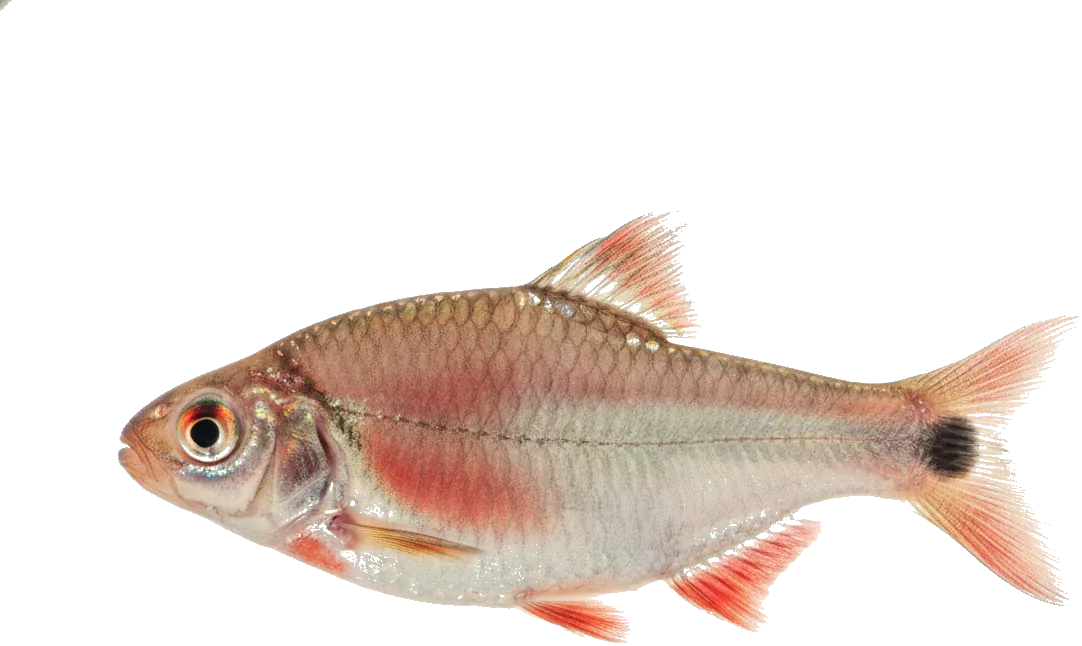
The rosy barb is a lively, hardy fish from the streams, lakes, and rice paddy waters of southern Asia, including India and Bangladesh. It gets its name from the beautiful rosy-pink and red color that spreads across the males, especially when they are trying to impress a female. Females and young fish are more of a silvery gold, but the whole group flashes and shimmers as they zip around the tank.
Rosy barbs are one of the toughest and easiest barbs to keep, which makes them a great fish for beginners. They handle cooler water than many tropical fish and are always busy exploring. They are peaceful, but they love company and can get nippy or nervous if kept in too small a group, so they should always be kept in a school of six or more.
| Care level | Easy |
| Adult size | 3-4 in (8-10 cm) |
| Lifespan | 5 years |
| Temperament | Active and peaceful |
| Min. tank | 20 gal (76 L) |
| Temperature | 64-78 F (18-26 C) |
| pH | 6.0-7.5 |
| Diet | Omnivore |
| Schooling | Yes, groups of 6 or more |
Boys in their party colors
Male rosy barbs turn a deep rosy pink or red, especially at breeding time. The brighter a male glows, the more he is showing off to females and rivals. Females stay a calmer silvery gold.
Tough and beginner-friendly
Rosy barbs are very hardy and forgiving. They can even handle cooler room-temperature water that many tropical fish cannot, which makes them a smart pick for a first fish tank.
Happiest in a crowd
These are schooling fish that feel safe in numbers. Keep at least six together and they will relax and show their best colors. Kept in tiny groups they can turn nippy toward tankmates.
Fast and always busy
Rosy barbs are speedy swimmers that dart around all day. They do best in a longer tank with open swimming space and a secure lid, since active barbs can jump.
From rice paddies and rivers
In the wild they live in slow rivers, ponds, and the flooded fields where rice is grown. This means they are used to a range of water conditions, another reason they are so hardy.
Fun facts
- Male rosy barbs turn bright rosy pink to attract females.
- They come from the rivers and rice paddies of southern Asia.
- They can handle cooler water than most tropical fish.
- They are strong jumpers, so their tank needs a lid.
- A happy school of six or more shows the best colors.
Frequently asked questions
Are rosy barbs good for beginners?
Yes. They are hardy, active, and forgiving, which makes them one of the best barbs for a first tank.
Why is one of my rosy barbs pinker than the others?
That is likely a male showing off. Males glow rosy pink or red, especially at breeding time, while females stay silvery gold.
How many rosy barbs should I keep?
Keep at least six. In a proper school they feel safe, behave better, and are far less likely to nip fins.
Do rosy barbs need a heater?
They tolerate cooler water than many tropical fish, but a heater keeps their temperature steady and safe, which they still prefer.