Overview
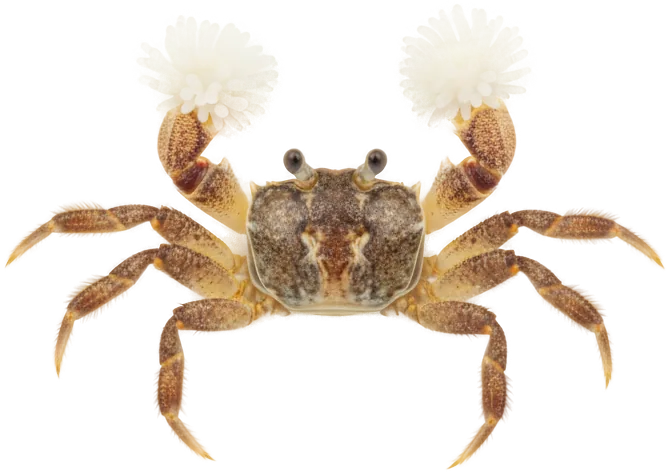
The pom pom crab is one of the ocean's most charming little animals. This tiny saltwater crab holds a small stinging anemone in each claw and waves them around like a cheerleader shaking pom-poms. The crab uses these living anemones for defense, waving them at anything that gets too close, and in return the anemones catch stray bits of food. It is a perfect example of two very different animals helping each other.
Pom pom crabs live on coral reefs, including reefs around Hawaii, so they need a marine (saltwater) reef aquarium, not a freshwater tank. They are small, shy, and mostly active at night, often hiding among live rock during the day. They are peaceful and reef safe, meaning they will not harm your corals, but their tiny size means they need a calm tank without large or aggressive tankmates.
| Care level | Moderate |
| Adult size | 1 in (2.5 cm) |
| Lifespan | 2 to 4 years |
| Temperament | Peaceful but shy |
| Min. tank | 10 gal (38 L) marine reef tank |
| Temperature | 75 to 82 F (24 to 28 C) |
| pH | 8.1 to 8.4 |
| Diet | Omnivore, tiny bits of meaty and plant food |
| Social | Best kept singly or as a mated pair |
What it is and where it comes from
The pom pom crab, also called the boxer crab, is a tiny marine crab that lives on coral reefs, including reefs around Hawaii. Its most amazing feature is that it carries a small anemone in each claw, using them like waving pom-poms for defense. It is a saltwater animal and cannot live in a freshwater tank.
Tank and water needs
Pom pom crabs need an established marine reef aquarium of around 10 gallons (38 L) or more, with live rock to explore and hide in. Keep saltwater conditions stable, with a temperature of 75 to 82 F (24 to 28 C) and a higher pH of about 8.1 to 8.4, matching a real reef. Stable saltwater and good hiding places are the keys to keeping them happy.
Diet and feeding
These crabs are omnivores that eat small bits of meaty foods and algae. In a reef tank they scavenge tiny leftovers, and you can offer finely chopped frozen foods or small pellets. Their anemone partners also catch food particles from the water, which the crab may share.
Tankmates and temperament
Pom pom crabs are peaceful and reef safe, so they will not bother corals. Because they are so small and shy, keep them with calm reef tankmates and avoid large fish, aggressive crabs, or anything that might eat them. They are best kept alone or as a single mated pair.
Their pom-pom partners
The most famous thing about this crab is its partnership with anemones. The crab holds a small anemone in each claw and waves them to sting off attackers, while the anemones get carried to new food and a safe ride. If a crab loses an anemone, it can sometimes split the remaining one in two so it has a pom-pom for each claw again.
Fun facts
- Pom pom crabs carry a small living anemone in each claw and wave them for defense.
- They are also called boxer crabs.
- They live on coral reefs and need a saltwater tank, not freshwater.
- If a crab loses an anemone, it can split the other one to have two again.
- They are reef safe and will not harm corals.
Frequently asked questions
Why does the pom pom crab hold anemones?
It uses the stinging anemones like tiny weapons, waving them at attackers for defense. In return, the anemones get carried around to find food.
Can I keep a pom pom crab in a freshwater tank?
No. Pom pom crabs are marine reef animals and need a stable saltwater aquarium to survive.
Are pom pom crabs safe with corals?
Yes, they are reef safe and will not harm corals. Just keep them away from large or aggressive tankmates that could eat them.
Why do I hardly ever see my pom pom crab?
They are shy and mostly active at night, so they spend the day hiding among live rock. Watch after the lights dim to spot them.