Overview
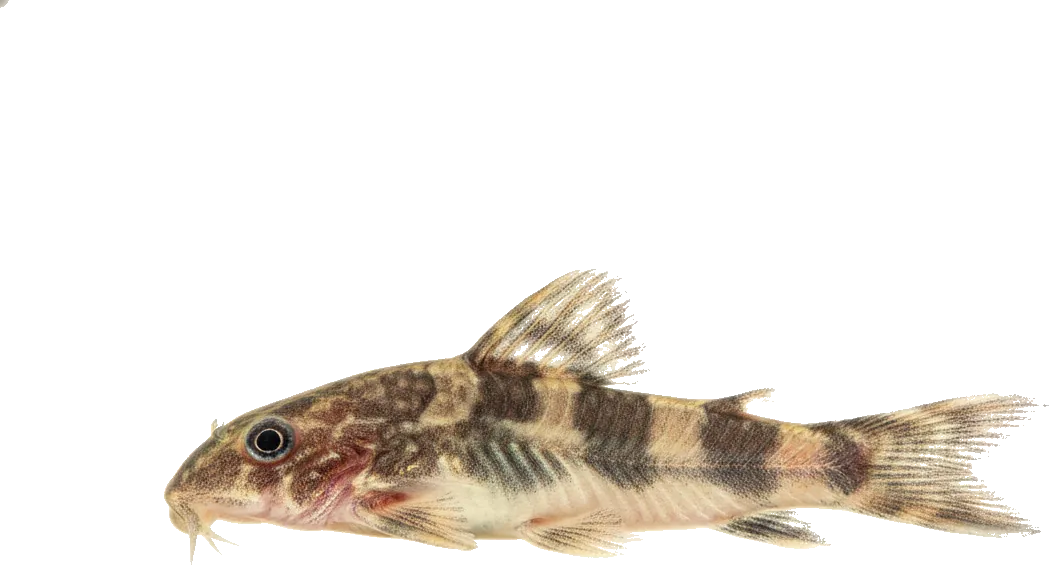
The otocinclus, often called an oto or dwarf sucker catfish, is one of the smallest catfish in the hobby, barely longer than your thumb. It comes from the streams and river edges of South America, where it clings to plants and rocks with a special sucker mouth and grazes on soft algae all day long. A thin dark stripe runs down its silvery body, and its round little mouth is always at work.
Otos are gentle, social fish that feel safe only in a group, so they should never be kept alone. They are wonderful natural cleaners, but they are a little delicate, which is why they suit an established tank with plenty of algae rather than a brand-new setup. Give a school of otos a mature, leafy home and they will scrub your glass and plants spotless.
| Care level | Intermediate |
| Adult size | 1.5 in (4 cm) |
| Lifespan | 3-5 years |
| Temperament | Peaceful |
| Min. tank | 10 gallons (38 L) |
| Temperature | 72-79 F (22-26 C) |
| pH | 6.0-7.5 |
| Diet | Herbivore |
| Schooling | Yes, keep 6 or more |
Little algae machines
Otos spend almost every waking moment grazing on soft green and brown algae with their sucker mouths. A small group can keep the glass, leaves, and decorations remarkably clean, which is why keepers love them so much.
Safety in numbers
In the wild otos live in large groups, and they get stressed and shy when kept alone. A school of six or more helps them feel secure, so they graze out in the open instead of hiding all day.
A delicate newcomer
Many otos are still caught in the wild and arrive at stores thin and stressed, so they can be fragile at first. They do best added to a mature tank that already grows algae, giving them plenty to eat while they settle in.
Keep them fed
If your tank runs out of algae, otos can actually starve, since algae is their main food. Keepers offer blanched vegetables like zucchini or cucumber and algae wafers to make sure the little fish always have enough.
Built to cling
An oto's mouth works like a suction cup, letting it hold tightly to smooth surfaces even in flowing water. This grip lets it graze on plant leaves without damaging them.
Fun facts
- Otocinclus are among the smallest catfish kept in aquariums.
- Their sucker mouth lets them cling to glass, rocks, and even delicate plant leaves.
- They can actually starve if a tank has no algae, so extra veggies help.
- Most otos in stores are still collected from the wild.
- A group of otos will happily graze together out in the open.
Frequently asked questions
How many otocinclus should I keep?
At least six. They are social schooling fish that get stressed alone, and a group makes them bolder, healthier, and more fun to watch.
Are otos good for a brand-new tank?
Not really. New tanks have little algae and unstable water, which is hard on delicate otos. They do much better in an established tank that already grows algae.
What do I feed otos if the algae runs out?
Offer blanched zucchini, cucumber, or spinach, plus algae wafers. Otos are herbivores and need a steady supply of plant food to stay healthy.
Will otos hurt my plants?
No. They only scrape soft algae off the surface of leaves and never eat the plants themselves, so they are safe for a planted tank.