Overview
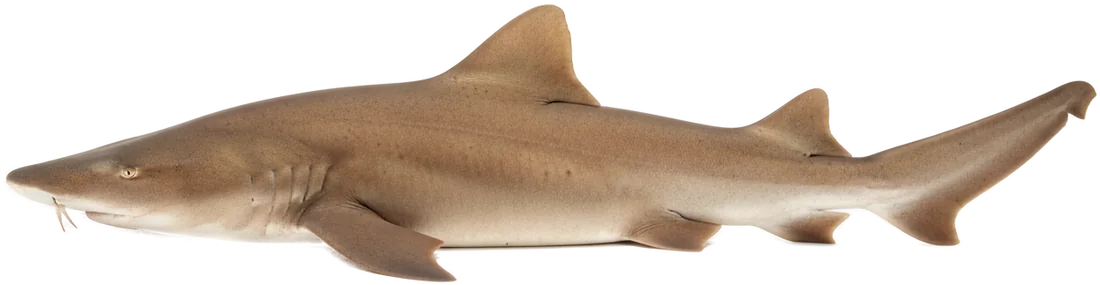
The nurse shark is one of the most relaxed sharks in the sea. Instead of racing through the water like a mako, it spends much of the day lying still on the sandy seafloor or tucked under a ledge, sometimes in cozy piles with other nurse sharks. It has a broad head, small eyes, and two little whisker-like feelers near its mouth called barbels, which it uses to taste and feel for food.
Nurse sharks are slow, calm, and mostly active at night, when they cruise along the bottom of the reef searching for hidden snacks. They have a clever way of eating, using their mouth like a powerful vacuum to suck prey right out of cracks and crevices. Because they are so mellow and easy to spot resting on the reef, nurse sharks are a favorite of divers and snorkelers in warm waters.
| Where it lives | Warm shallow reefs, sandy flats, and rocky ledges |
| Range | Warm Atlantic and eastern Pacific coasts, common in the Caribbean |
| Adult size | Commonly 7 to 10 ft (2.1 to 3 m) |
| Diet | Fish, shrimp, crabs, snails, octopus, and other seafloor animals |
| Lifespan | Around 25 years or more |
| Depth or habitat | Shallow reefs and seabeds, often resting on the bottom |
| Keep at home? | No, it grows large and needs the open reef |
The reef's couch potato
During the day, nurse sharks are famous for doing very little. They rest on the seabed or gather together under overhangs, sometimes stacked in groups, saving their energy for the night. Unlike many sharks, nurse sharks can pump water over their gills while lying still, so they do not have to keep swimming to breathe. This lets them rest on the bottom for long stretches.
Vacuum-powered eating
Nurse sharks are suction feeding experts. When they find prey like a shrimp, crab, or small fish hiding in a crack, they place their mouth over the spot and suck hard, pulling the food out with surprising power. Their small mouths and rows of tiny, crushing teeth are perfect for grinding up shellfish and other hard-shelled snacks from the reef floor.
Whiskers for finding food
Just below its snout, a nurse shark has two short feelers called barbels that look a bit like whiskers. As the shark cruises slowly over the seabed at night, it uses these barbels to taste and feel for hidden prey. Combined with its keen sense of smell, this helps the nurse shark track down animals buried in the sand or wedged into rocky holes in the dark.
Are they dangerous?
Nurse sharks are among the most harmless sharks people are likely to meet. They are slow, calm, and would rather be left alone to rest. The few times they have bitten people, it was almost always because someone grabbed or bothered them. As long as divers admire them without touching, nurse sharks are gentle and peaceful neighbors on the reef.
Doing okay, but still watched
Nurse sharks are more common than many other sharks, and in some places their numbers are healthy. Even so, they can still be harmed by fishing and by damage to the reefs they call home. Protecting warm shallow reefs helps nurse sharks and all the other creatures that share those bright, busy underwater neighborhoods.
Fun facts
- Nurse sharks can rest on the seafloor without swimming because they pump water over their gills.
- They eat by sucking prey out of cracks like a living vacuum cleaner.
- Two whisker-like barbels near the mouth help them taste and feel for food.
- They often pile up together in groups to rest during the day.
- Nurse sharks are mostly active at night and very calm during the day.
Frequently asked questions
Are nurse sharks dangerous?
Not really. They are slow and gentle, and they only bite if someone grabs or bothers them, so admire them without touching.
How big do they get?
Nurse sharks are usually about 7 to 10 ft (2.1 to 3 m) long.
What do they eat?
Fish, shrimp, crabs, snails, and octopus, which they suck out of cracks in the reef, mostly at night.
Why do they rest on the bottom?
Unlike many sharks, nurse sharks can breathe while lying still, so they spend the day resting to save energy for night-time hunting.
Can I keep a nurse shark at home?
No. Nurse sharks grow large and need a big stretch of real reef, so they belong in the wild, not in a home tank.