Overview
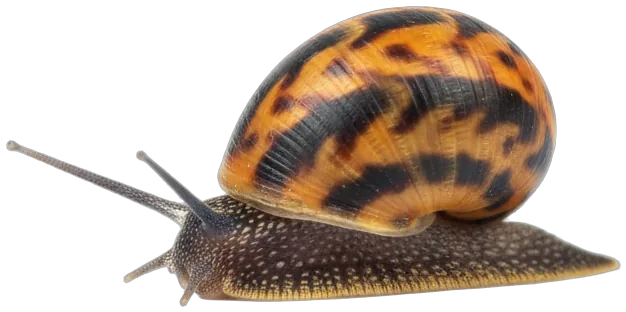
The nerite snail is a small, tough snail famous for being one of the best algae eaters you can put in a freshwater tank. It comes from the rivers and coastal streams of eastern Africa, often near where fresh water meets the sea. Its shell can be striped like a tiger, dotted, or horned, which makes each little snail look like a piece of living jewelry.
The most surprising thing about nerite snails is that they will not overrun your tank. While they may lay tiny white eggs, those eggs need brackish (slightly salty) water to hatch, so in a normal freshwater aquarium no baby snails appear. That makes them a favorite for keepers who want a spotless algae crew without ending up with a snail explosion.
| Care level | Easy |
| Adult size | 1 in (2.5 cm) |
| Lifespan | 1-2 years |
| Temperament | Peaceful |
| Min. tank | 5 gallons (19 L) |
| Temperature | 72-80 F (22-27 C) |
| pH | 7.0-8.5 |
| Diet | Herbivore |
| Schooling | Solitary or in groups |
The ultimate algae grazer
Nerite snails spend their days slowly scraping algae off glass, rocks, and decorations with a rough little tongue called a radula. They clean surfaces so thoroughly that many keepers add them just to keep the tank looking crystal clear.
No baby boom
Nerite snails do not breed in ordinary freshwater. Their eggs need brackish water to develop, so any eggs laid in a home tank simply will not hatch. That means you get a great cleaner with zero risk of an overpopulation problem.
Fancy shells
These snails come in many styles, from the tiger nerite with dark stripes to the horned nerite with tiny spikes on its shell. The patterns are natural and vary from snail to snail, so no two look exactly alike.
Watch the lid
Nerites are curious climbers and sometimes wander right up the glass and out of the water. A tank lid helps keep them from escaping, since a snail on the carpet is not a happy snail.
Keeping the shell healthy
Like all snails, nerites need calcium in the water to keep their shells strong. Slightly hard, mineral-rich water suits them well, and it also helps that they prefer a stable, established tank with plenty of algae to eat.
Fun facts
- Nerite snails cannot breed in plain freshwater because their eggs need salty water to hatch.
- They are considered one of the most effective algae eaters in the hobby.
- They graze using a tongue-like organ called a radula covered in tiny teeth.
- Popular types include the tiger, zebra, olive, and horned nerite.
- They sometimes climb out of open-top tanks, so a lid is a good idea.
Frequently asked questions
Will nerite snails take over my tank?
No. Their eggs need brackish water to hatch, so in a normal freshwater aquarium the population never grows out of control. This is a big reason they are so popular.
Why are there tiny white dots on my decorations?
Those are nerite eggs. In freshwater they simply will not hatch, so they are harmless, though some keepers scrape them off just for looks.
What do nerite snails eat if there is no algae?
If they clean up all the algae, you can offer them algae wafers or blanched vegetables like zucchini so they always have enough to graze on.
How do I stop my snail from escaping?
Keep a lid on the tank. Nerites like to climb, and a covered top keeps them safely in the water where they belong.