Overview
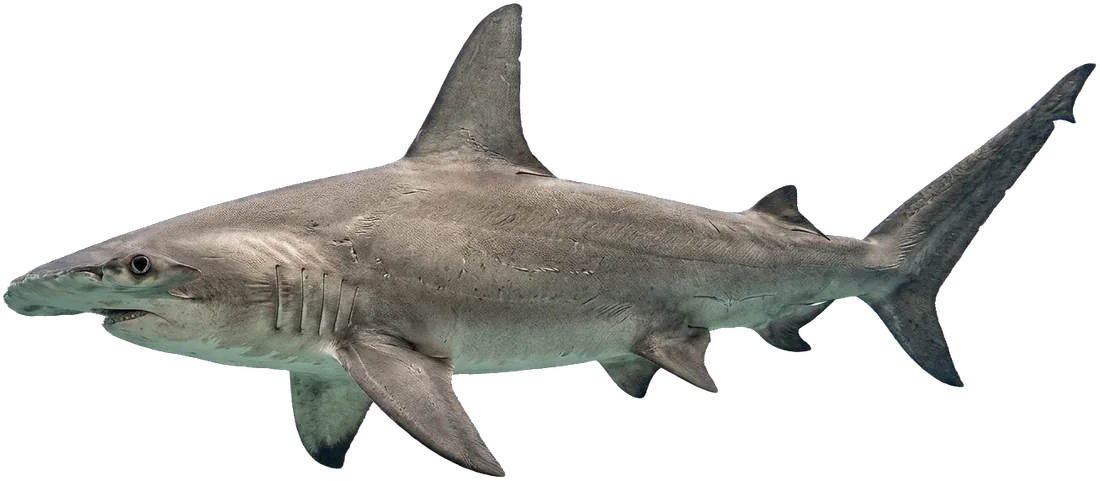
The great hammerhead is the biggest of all the hammerhead sharks, and its wide, flat, hammer-shaped head is one of the strangest sights in the sea. That odd head is called a cephalofoil, and it is not just for show. With its eyes placed far out on each end, the shark can see in almost every direction, and the wide head is packed with sensors that help it find prey hidden on the seafloor.
Great hammerheads are especially fond of stingrays, and they are not bothered by the ray's venomous tail spine. A hammerhead will often use the flat sides of its head to pin a ray to the sand before eating it. Even though they look intimidating, great hammerheads rarely bother people, and sadly they are now critically endangered, so seeing one in the wild is a special and increasingly rare treat.
| Where it lives | Warm coastal seas, reefs, and continental shelves |
| Range | Tropical and warm-temperate waters worldwide |
| Adult size | Commonly around 11 to 15 ft (3.5 to 4.5 m), sometimes larger |
| Diet | Stingrays, other rays, fish, squid, and smaller sharks |
| Lifespan | Around 20 to 40 years |
| Depth or habitat | Surface down to about 300 m, often near reefs and drop-offs |
| Keep at home? | No, a large wide-ranging ocean predator |
That amazing head
The hammer-shaped head, or cephalofoil, gives the great hammerhead special powers. Its widely spaced eyes let it see above, below, and around itself much better than most sharks. The wide head is also covered with extra electricity-sensing pores called ampullae of Lorenzini, which act like a metal detector to sense prey buried under the sand. Some scientists think the head even helps the shark turn and steer more sharply, like the wings of a plane.
Stingray specialist
Great hammerheads love to eat stingrays, and they have a clever way of catching them. Using the wide head, a hammerhead can slam a ray down and hold it against the seabed while taking bites. These sharks seem to have a high tolerance for the ray's venomous barb, and hammerheads are sometimes found with old stingray spines stuck harmlessly in their jaws, proof of many past hunts.
Warm-water wanderer
Great hammerheads live in warm seas all around the world, patrolling reefs, drop-offs, and open coastal waters. They often swim alone rather than in groups, and some travel long distances with the seasons to follow warmer water and better hunting. They are strong, fast swimmers that can cover a lot of ground while searching for their next meal.
Are they dangerous?
With its huge size and strange head, the great hammerhead can look scary, but it very rarely interacts with people, and confirmed bites on humans are extremely uncommon. Like most sharks, it would much rather hunt rays and fish than bother a swimmer. Divers who are lucky enough to see one usually describe it as a shy, wary animal that keeps its distance.
Critically endangered
Sadly, the great hammerhead is in serious trouble. It is listed as critically endangered because too many are caught for their large fins and because they are easily harmed when accidentally caught in fishing gear. Hammerheads are also very sensitive to stress and often do not survive being caught even if released. Protecting them means reducing overfishing and giving these remarkable sharks safer seas.
Fun facts
- The wide hammer head lets it see in nearly all directions at once.
- Its head works like a metal detector, sensing stingrays buried in the sand.
- Great hammerheads can pin stingrays to the seafloor with their head before eating them.
- They are the largest of all the hammerhead shark species.
- Great hammerheads are critically endangered and need our protection.
Frequently asked questions
Why does it have a hammer-shaped head?
The wide head, called a cephalofoil, helps it see all around, sense hidden prey with special pores, and steer sharply while hunting.
How big does it get?
Great hammerheads are commonly around 11 to 15 ft (3.5 to 4.5 m) long, and a few grow even larger.
What does it eat?
Its favorite food is stingrays, but it also eats other rays, fish, squid, and smaller sharks.
Is it dangerous to people?
Not really. Bites on humans are extremely rare, and hammerheads usually stay away from swimmers and divers.
Are they endangered?
Yes. The great hammerhead is critically endangered, mostly because of overfishing, so it badly needs protection.