Overview
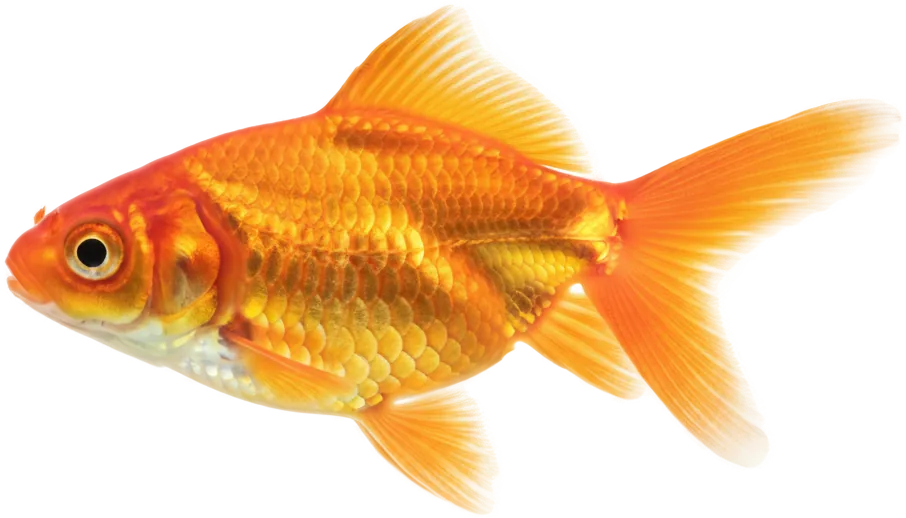
The common goldfish is a cool-water member of the carp family and, after thousands of years of breeding in China, the most recognisable pet fish on Earth. The slim, single-tailed comet and common types are strong, fast swimmers that stay bright and active in unheated water.
Goldfish have an unfair reputation as throwaway bowl fish. In truth they are big, long-lived, messy eaters that need a large, well-filtered tank or a garden pond. Given real space and clean water, a single-tailed goldfish can reach the size of your hand and live for well over a decade.
| Care level | Beginner |
| Adult size | 6-10 in (15-25 cm), larger in ponds |
| Lifespan | 10-15 years, sometimes 20+ |
| Temperament | Peaceful and sociable |
| Min. tank | 30 gal (114 L) for one, +10 gal each extra |
| Temperature | 64-74 F (18-23 C), no heater needed |
| pH | 7.0-8.4 |
| Hardness | 5-19 dGH |
| Diet | Omnivore |
| Schooling | Happier in small groups |
Water & tank conditions
Goldfish are a cool-water species and do NOT need a heater; they are comfortable from about 64-74 F and even cooler in a pond. They produce a lot of waste, so strong filtration and regular water changes matter far more than for most fish. A bowl is not a home: plan on at least 30 gallons for the first fish and more for each companion.
Aquascape & setup
Use a large tank or pond with smooth gravel or bare bottom, sturdy hardy plants (goldfish nibble and uproot soft ones) and plenty of open swimming room. Choose gravel too big to swallow, since goldfish love to mouth substrate. Cold-hardy plants like anubias, java fern and elodea hold up best.
Diet & feeding
Omnivores with big appetites. Feed a quality goldfish pellet or gel food plus blanched vegetables (peas, spinach) and occasional frozen foods. Feed small amounts once or twice a day and avoid overfeeding, which fouls the water and causes digestive and swim-bladder trouble.
Tankmates & temperament
Peaceful and best kept with other goldfish. Their cool-water needs and gentle pace rule out most tropical community fish. White cloud mountain minnows and weather loaches are among the few cool-water tankmates that suit them; avoid fin-nippers and anything small enough to be eaten.
Breeding
Goldfish spawn in spring as the water warms, scattering sticky eggs over plants. They do not guard eggs or fry and will eat both, so breeders move the eggs to a separate tank. In a pond, dense plants let a few fry survive on their own.
Fun facts
- Goldfish were bred from wild carp in China more than a thousand years ago, making them one of the oldest domesticated fish.
- They have no stomach, so many small feedings suit them better than one big meal.
- A well-kept single-tailed goldfish can live 15 to 20 years and grow larger than your hand.
- Goldfish can recognise their keepers and be trained to feed from your fingers.
- The myth that they have a three-second memory is false; goldfish remember things for months.
Frequently asked questions
Can a goldfish live in a bowl?
No. Goldfish grow large, live long and produce a lot of waste, so a bowl quickly becomes cramped and toxic. A single fish needs at least 30 gallons of filtered water, or a garden pond.
Do goldfish need a heater?
No. Goldfish are a cool-water species and are comfortable at room temperature, roughly 64-74 F. A heater is usually unnecessary and very warm water is actually stressful for them.
How big do goldfish get?
Single-tailed goldfish commonly reach 6-10 inches in a tank and can grow even larger in a pond, which is why they need far more space than people expect.
How long do goldfish live?
With proper space, filtration and diet, goldfish routinely live 10-15 years, and some pond fish reach 20 years or more.
What do goldfish eat?
They are omnivores. A goldfish pellet or gel food plus blanched vegetables like peas and occasional frozen foods keeps them healthy; feed small amounts and do not overfeed.