Overview
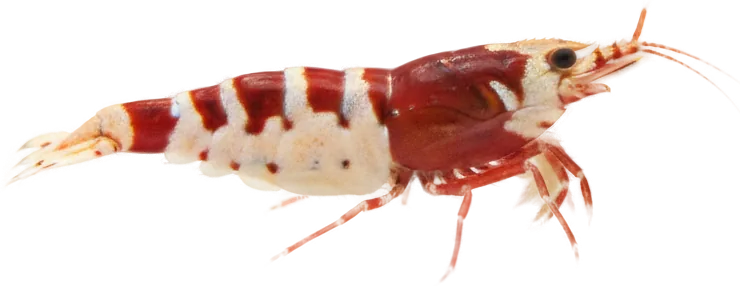
The crystal red shrimp is one of the most prized shrimp in the whole hobby, famous for its bold bands of bright red and snowy white. It is a Caridina color shrimp, a cousin of the easier Neocaridina shrimp, and it was created in Japan by carefully breeding red-and-white patterned shrimp. Collectors grade them by how thick and solid their white stripes are, with the very best patterns being highly sought after.
These little shrimp are peaceful grazers that pick at biofilm and algae just like other dwarf shrimp, but they are pickier about their water. Crystal reds like soft, slightly acidic water and stable conditions, which is why they are considered a step up from beginner shrimp. As with all invertebrates, copper is poisonous to them, and their tiny young are easily eaten by fish.
| Care level | Moderate to hard |
| Adult size | 1 in (2.5 cm) |
| Lifespan | 1 to 2 years |
| Temperament | Peaceful |
| Min. tank | 10 gal (38 L) |
| Temperature | 68 to 76 F (20 to 24 C) |
| pH | 5.8 to 6.8 |
| Diet | Omnivore, mostly algae and biofilm |
| Social | Colony, keep in groups of 6 or more |
What it is and where it comes from
The crystal red shrimp is a striking red-and-white color form of Caridina cantonensis, a dwarf shrimp from Asia. It was developed in Japan by selecting shrimp with the reddest and cleanest white markings. It belongs to the Caridina group, which generally needs softer, more acidic water than the hardier Neocaridina shrimp.
Tank and water needs
Crystal reds do best in a mature, stable tank of at least 10 gallons (38 L) with soft, slightly acidic water. Aim for cooler temperatures of 68 to 76 F (20 to 24 C) and a pH around 5.8 to 6.8, often using a special active substrate to keep the water soft. Clean, steady conditions matter a lot to them, and copper must always be avoided.
Diet and feeding
Like other dwarf shrimp, crystal reds graze on the algae and biofilm that grow naturally in a healthy tank. Supplement with small amounts of shrimp-specific foods, blanched vegetables, or leaf litter such as almond leaves. Feed lightly so leftover food does not spoil the sensitive water they need.
Tankmates and temperament
These shrimp are completely peaceful and best kept in a dedicated shrimp tank so nothing eats them or their babies. If you add fish, choose only the tiniest, calmest species, and expect fewer surviving young. Their delicate water needs also make it hard to find fish that thrive in the same conditions.
Breeding and moulting
Crystal red shrimp breed in freshwater, and a female carries her eggs under her tail until miniature shrimp hatch. Keeping the water soft and stable is the key to a growing colony. They also moult like all shrimp, shedding their shells to grow, and hide while their new shell hardens.
Fun facts
- Crystal red shrimp were created in Japan by breeding for red-and-white patterns.
- They are graded by how thick and solid their white stripes are.
- They are Caridina shrimp and need softer, more acidic water than cherry shrimp.
- Copper is toxic to them, so copper-based products must be kept out of the tank.
- They shed their whole shell as they grow, which is called moulting.
Frequently asked questions
Why are crystal red shrimp harder to keep?
They need soft, slightly acidic, and very stable water. Small changes stress them more than hardier shrimp, so they suit keepers with a little experience.
What makes some crystal reds more valuable?
Collectors look at the pattern. Shrimp with thicker, brighter, and cleaner white bands are graded higher and are more prized.
Can crystal red shrimp live with fish?
It is best to keep them alone. Most fish eat baby shrimp, and few fish enjoy the soft, acidic water crystal reds prefer.
Is copper dangerous for them?
Yes. Copper is toxic to all shrimp, so always make sure medicines and fertilizers are copper-free.