Overview
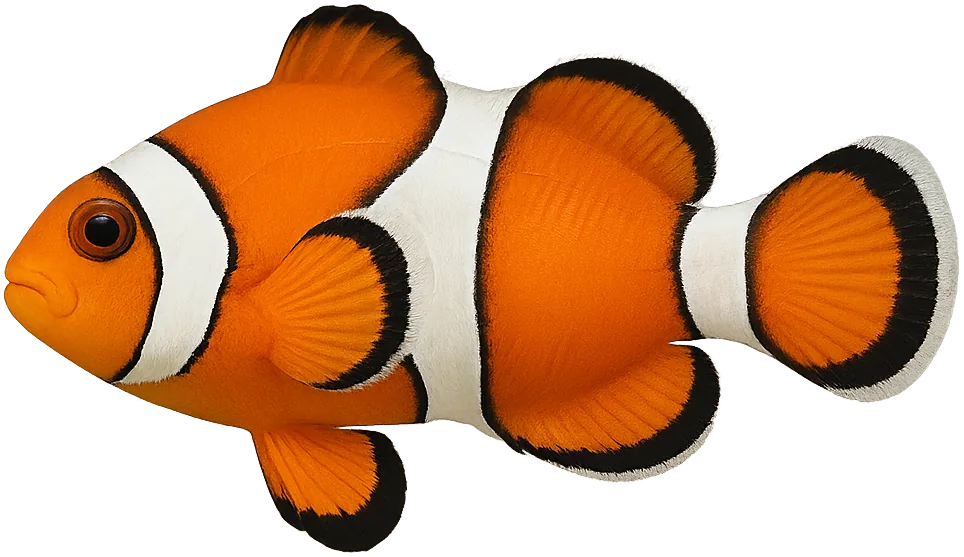
The ocellaris clownfish is a small, boldly striped reef fish from the warm coastal waters of the Indo-Pacific. It lives among the stinging tentacles of sea anemones, protected by a slippery mucus coat that keeps the anemone from firing its stings. In return the clownfish chases off the anemone's predators, fans fresh water over it and keeps it clean, one of the ocean's most famous partnerships.
Made world-famous as 'Nemo', the ocellaris is one of the hardiest and most popular marine aquarium fish, and one of the first to be bred in captivity in large numbers, which takes pressure off wild reefs.
| Care level | Intermediate |
| Adult size | 3-4 in (8-10 cm) |
| Lifespan | 6-10+ years |
| Temperament | Semi-aggressive (territorial) |
| Min. tank | 20 gal (76 L) marine |
| Water | Saltwater reef |
| Temperature | 75-82°F (24-28°C) |
| Diet | Omnivore |
| Home aquarium? | Yes, a hardy starter marine fish |
A home in an anemone
A clownfish spends almost its whole life within darting distance of a single host anemone, rarely straying more than a metre. It builds up its protective mucus by gently touching the tentacles a little at a time until the anemone treats it as part of itself.
Family life and changing sex
Every clownfish is born male. A group lives in a strict pecking order around one anemone, led by a single large female. If she dies, the biggest male changes sex and becomes the new female, and the next male in line becomes her partner. A clownfish cannot change back.
Diet
In the wild clownfish are omnivores, picking zooplankton from the water and nibbling algae near their anemone. In an aquarium they readily eat marine flakes, pellets and frozen foods such as mysis and brine shrimp.
In the aquarium
Captive-bred clownfish are among the easiest marine fish to keep and do not strictly need an anemone in a tank, though they may 'host' in a coral or even a pump outflow. A bonded pair will defend a small territory and can be feisty toward newcomers.
Fun facts
- A clownfish is shielded from its anemone's sting by a special mucus coat it builds up by touching the tentacles.
- All clownfish are born male; the dominant fish in a group turns female and can never switch back.
- There are about 30 species of clownfish, and each tends to favour particular kinds of anemone.
- Clownfish are one of the few reef fish bred in captivity in big numbers, easing pressure on wild reefs.
- They chirp and pop to defend their anemone and settle the pecking order.
Frequently asked questions
Do clownfish need an anemone?
In the wild, yes, it is their home and protection. In an aquarium they do not need one and live happily without it, though they may host in a coral or powerhead instead.
Is a clownfish a good first saltwater fish?
Yes. Captive-bred clownfish are among the hardiest and most forgiving marine fish, which is why they are a classic beginner's choice for a reef tank.
Can a clownfish really change sex?
Yes. Every clownfish is born male, and the largest fish in a group becomes the female. This one-way change is called sequential hermaphroditism.
What do clownfish eat?
They are omnivores. In the wild they eat zooplankton and algae; in a tank they take marine pellets, flakes and frozen foods like mysis and brine shrimp.