Overview
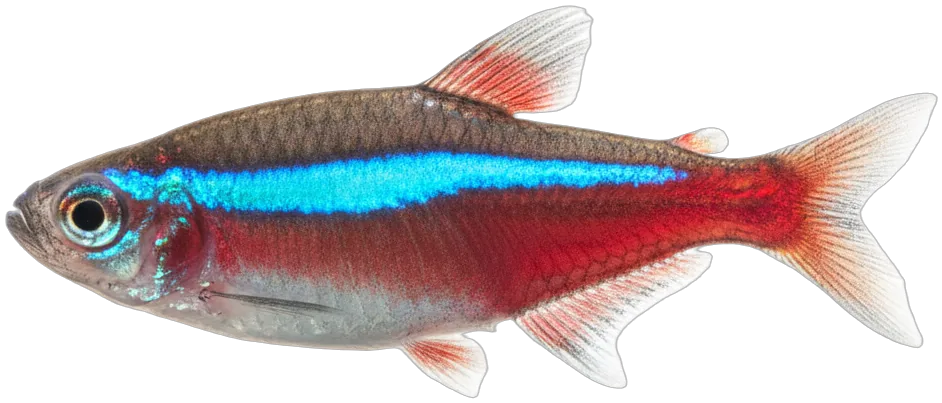
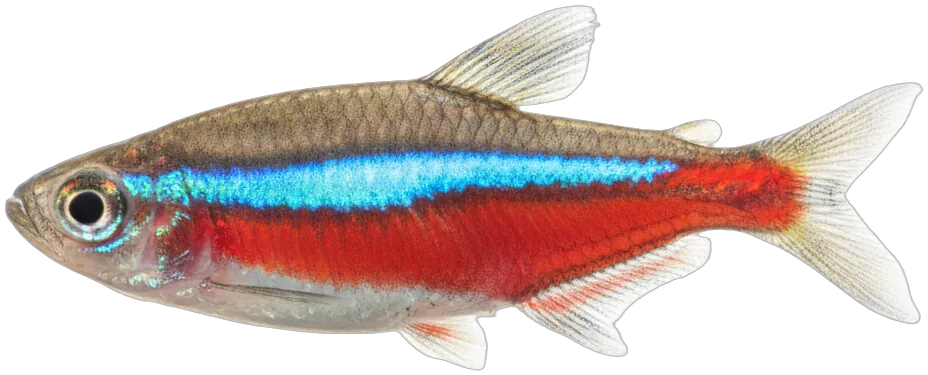
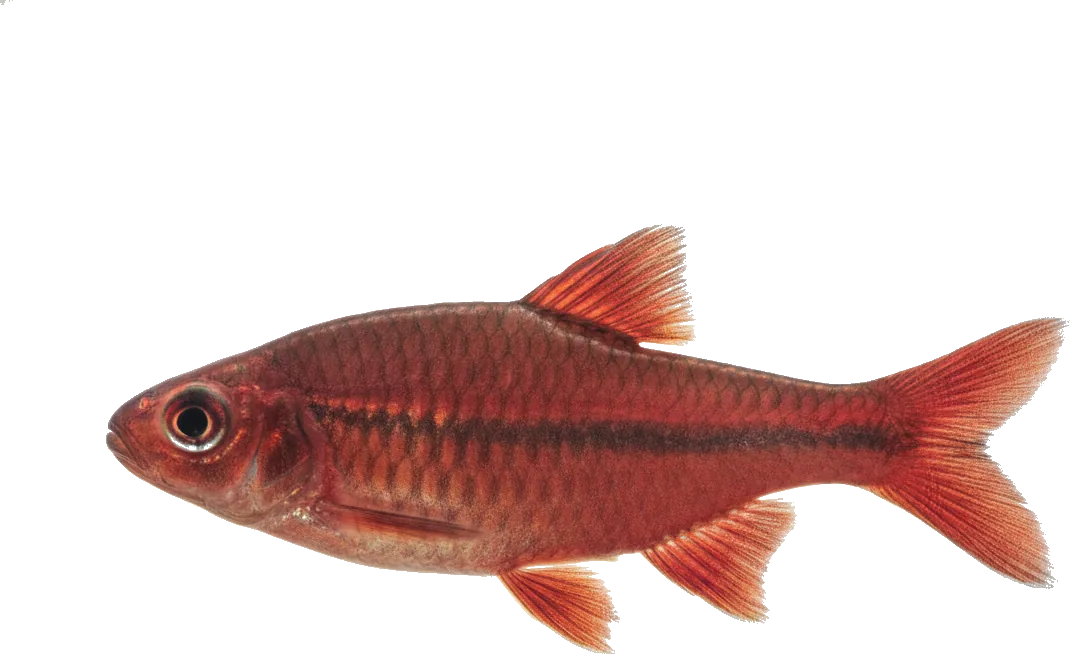
The Cherry Barb is a small, gentle fish from the shady jungle streams of Sri Lanka in South Asia. It gets its name from the males, who turn a rich cherry-red color, especially when they are healthy or trying to impress a female. Females and calm males are a softer tan color with a dark stripe running along the side. It is a slim, graceful little fish that fits nicely in a peaceful community tank.
Unlike some of its cousins, such as the nippy tiger barb, the Cherry Barb is calm and well-behaved, which makes it a great choice for beginners. In the wild these fish live in slow, shady water full of plants and fallen leaves. Give them a similar planted tank and a group of friends, and the males will reward you by glowing their brightest red.
| Care level | Beginner |
| Adult size | 1.5-2 in (4-5 cm) |
| Lifespan | 4-6 years |
| Temperament | Peaceful |
| Min. tank | 20 gallons (76 liters) |
| Temperature | 73-81°F (23-27°C) |
| pH | 6.0-7.5 |
| Diet | Omnivore that eats flakes, micro pellets, and small live foods |
| Schooling | Yes, keep a group of six or more |
Water and tank
Cherry Barbs are hardy and adapt to many water conditions, which makes them easy to keep. A group is comfortable in a 20 gallon tank. They come from soft, slightly acidic jungle streams, so water that is neutral to a bit acidic suits them well. They like a gentle current and clean water, and regular water changes help keep their colors bright and their bodies healthy.
Aquascape and setup
These barbs are a little shy, so a tank with plenty of plants, driftwood, and dried leaves helps them feel safe and shows off their color. A darker substrate and some floating plants to dim the light bring out the deepest reds in the males. Leave an open lane for swimming in the middle. The more natural and planted the tank, the bolder and more colorful they become.
Diet and feeding
Cherry Barbs are easy-to-please omnivores. A good quality flake or micro pellet makes a solid everyday diet, and treats of live or frozen foods like daphnia, brine shrimp, and bloodworms bring out their best red color. A little veggie matter is good too. Feed small amounts once or twice a day, only what they can eat in a couple of minutes, to keep the water clean.
Tankmates and temperament
This is one of the most peaceful barbs, so it is a wonderful community fish. It gets along with other calm species like tetras, rasboras, corydoras, dwarf gouramis, and shrimp. Keep at least six together, and ideally more females than males, so the males display their colors to each other instead of picking on one fish. In a group they are lively and confident.
Breeding and eggs
Cherry Barbs are egg scatterers and fairly easy to breed. A well-fed pair will scatter sticky eggs among fine plants, and the parents take no care of them, so they should be removed afterward or the eggs will be eaten. In a densely planted tank, a few fry may survive on their own. The tiny babies grow quickly once they can eat crushed flakes and baby brine shrimp.
Fun facts
- Only the male Cherry Barbs turn deep cherry-red, and they glow brightest when courting a female.
- They come from shady jungle streams on the island of Sri Lanka.
- They are much more peaceful than their famous cousin, the fin-nipping tiger barb.
- A stressed or newly bought Cherry Barb looks pale, then colors up once it feels at home.
- Wild Cherry Barbs became scarce, so most in stores today are raised on farms.
Frequently asked questions
Why is my Cherry Barb not red?
Females are naturally a soft tan, and males only glow deep red when they feel healthy and settled. Give them a planted tank, a group, good food, and time, and the males will color up.
Are Cherry Barbs peaceful?
Yes, they are one of the most peaceful barbs and make excellent community fish, unlike the nippy tiger barb they are sometimes confused with.
How many should I keep together?
Keep at least six. A group makes them feel secure, keeps the males colorful, and lets you enjoy their natural, lively behavior.
Are they good for beginners?
Very much so. They are hardy, peaceful, easy to feed, and forgiving of water conditions, making them a great fish for someone new to the hobby.