Overview
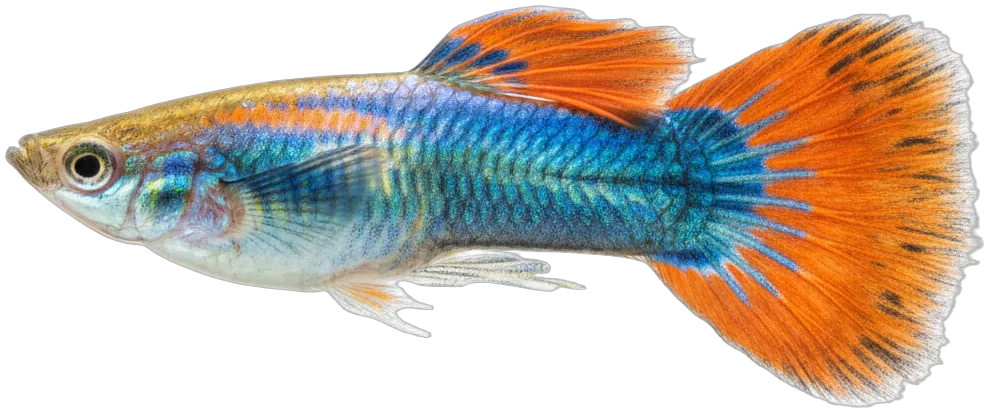
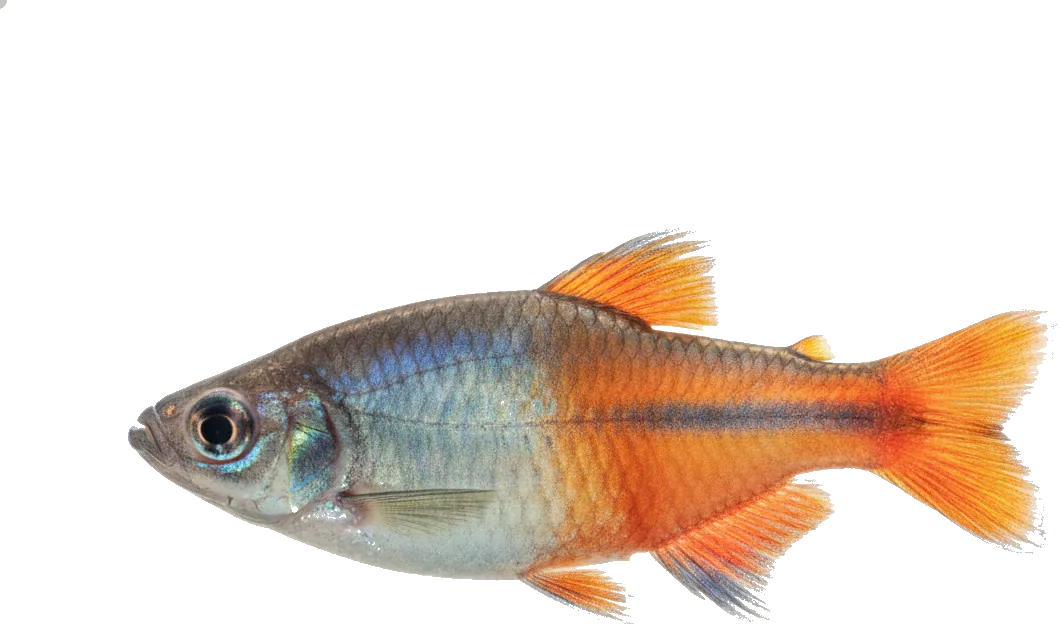
The Boesemani Rainbowfish is one of the most colorful freshwater fish in the world. The front half of its body glows a deep blue-purple while the back half burns bright orange, almost like the fish was dipped in two different sunsets. It comes from the Ayamaru Lakes on the island of New Guinea, a small area of clear tropical water where it is found in the wild and nowhere else.
These fish are lively, friendly, and love to swim in the open, flashing their colors when the light hits them just right. Young rainbowfish can look plain and silvery in the pet store, but as they grow up and settle in with a group, their colors deepen and shine. A school of adult Boesemani in a planted tank is a truly stunning sight.
| Care level | Beginner to intermediate |
| Adult size | 3-4 in (8-11 cm) |
| Lifespan | 5-8 years |
| Temperament | Peaceful and active |
| Min. tank | 30 gallons (114 liters) |
| Temperature | 74-82°F (23-28°C) |
| pH | 7.0-8.0 |
| Diet | Omnivore that eats flakes, small pellets, and live or frozen foods |
| Schooling | Yes, keep a group of six or more |
Water and tank
Boesemani Rainbowfish are strong swimmers that need room to move, so a tank of 30 gallons or more, and longer rather than tall, suits them best. They like warm, clean water that is neutral to slightly hard and alkaline. Good filtration and regular water changes keep them healthy, and a gentle current gives them something to swim against, which they enjoy.
Aquascape and setup
A planted tank with lots of open swimming space in the middle shows these fish off beautifully. Dark substrate and a background of tall plants make their blue and orange colors look even richer. Leave the top and center of the tank clear so they can cruise back and forth. Morning sunlight or good aquarium lighting makes their colors truly glow.
Diet and feeding
Rainbowfish are omnivores with hearty appetites. Feed them a good quality flake or small pellet as a base, and add live or frozen treats like brine shrimp, daphnia, and bloodworms to bring out their brightest colors. A little veggie matter, such as spirulina flakes, rounds out their diet. Feed small meals a couple of times a day for the healthiest, most colorful fish.
Tankmates and temperament
Boesemani Rainbowfish are peaceful and get along with other active, similar-sized community fish like other rainbowfish, larger tetras, barbs, and rasboras. Because they are fast and bold, they are not good tankmates for very shy or tiny fish that might feel overwhelmed. Keeping them in a group of at least six keeps them confident and shows off their natural schooling behavior.
A fish that changes color
One of the coolest things about rainbowfish is that their colors are not fixed. When a male is excited, showing off, or feeling healthy and happy, his colors flash brighter and a glowing stripe can appear on his forehead. When he is stressed or the lights just came on, he may look pale. Watching the colors shift through the day is part of the fun.
Fun facts
- Wild Boesemani Rainbowfish live only in the Ayamaru Lakes region of New Guinea.
- Their bodies are blue-purple in the front and bright orange at the back, split down the middle.
- Young rainbowfish look silvery and plain, then get colorful as they grow up.
- Males can flash a glowing stripe on their forehead when they want to impress a female.
- They can live seven or eight years, longer than many other small aquarium fish.
Frequently asked questions
Why is my Boesemani Rainbowfish not colorful?
Young fish and stressed fish often look pale. Give them time to grow, a good diet, clean water, and a group of their own kind, and their colors will deepen beautifully.
How big of a tank do they need?
At least 30 gallons, and a longer tank is better than a tall one, because these fish are active swimmers that need room to cruise.
Do they need to be in a group?
Yes. Keep six or more together. In a school they feel safe, show off their best colors, and behave more naturally.
What makes their colors brightest?
Clean warm water, good lighting, a varied diet with some live or frozen foods, and the company of other rainbowfish all help their colors shine.