Overview
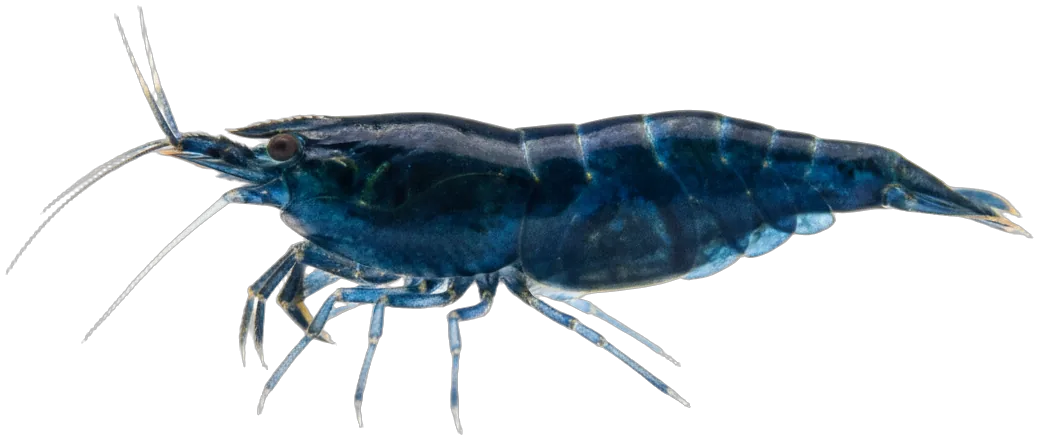
The blue velvet shrimp is a bright blue color version of the popular Neocaridina shrimp, the same friendly species that also comes in cherry red, yellow, and green. Breeders selected the bluest shrimp over many generations until they created this deep, velvety color. They are small, peaceful grazers that spend the day picking soft algae and biofilm off plants, rocks, and the tank floor.
Neocaridina shrimp like the blue velvet are among the easiest shrimp for beginners because they are tough and breed readily in a normal freshwater tank. A small starting group will happily turn into a colony over time. Just like every invertebrate, they cannot survive copper, so care must be taken with any medicines or fertilizers, and most fish will eat their tiny babies.
| Care level | Easy |
| Adult size | 1.2 in (3 cm) |
| Lifespan | 1 to 2 years |
| Temperament | Peaceful |
| Min. tank | 5 gal (19 L) |
| Temperature | 68 to 78 F (20 to 26 C) |
| pH | 6.5 to 7.5 |
| Diet | Omnivore, mostly algae and biofilm |
| Social | Colony, keep in groups of 6 or more |
What it is and where it comes from
The blue velvet shrimp is a selectively bred color form of Neocaridina davidi, a hardy dwarf shrimp originally from Asia. Wild Neocaridina are a plain brownish color, but careful breeding created the vivid blue you see in the hobby. They are peaceful, active grazers that add a pop of living color to planted tanks.
Tank and water needs
A group does well in a planted tank as small as 5 gallons (19 L), though bigger is easier to keep stable. Aim for 68 to 78 F (20 to 26 C) and a pH around 6.5 to 7.5, with clean, steady water. Cover the filter intake with a sponge so babies do not get sucked in, add plenty of moss and plants for grazing and hiding, and never use anything containing copper.
Diet and feeding
Blue velvet shrimp mostly feed themselves on the algae and biofilm growing in the tank. Add a small amount of extra food a few times a week, such as a shrimp pellet, blanched vegetables, or a bit of algae wafer. Feed only what they can finish in a couple of hours so the water stays clean.
Tankmates and temperament
These shrimp are gentle and never bother anyone. The safest tank is a shrimp-only tank or one with very small, peaceful fish like small rasboras. Remember that most fish see baby shrimp as a snack, so a colony grows fastest when there are lots of plants to hide in or no fish at all.
Breeding and moulting
Blue velvet shrimp breed easily in freshwater, unlike Amano shrimp. A female carries her eggs under her tail, fanning them until tiny shrimp hatch that look like miniature adults. They also moult, shedding their shell to grow, and are soft and hidden for a short time afterward.
Fun facts
- Blue velvet shrimp are a blue color version of the same species as cherry shrimp.
- Their bright blue color was created by breeders selecting the bluest shrimp over many generations.
- They breed easily in normal freshwater and can grow into a whole colony.
- Copper is deadly to them, so copper-based products must be avoided.
- A female carries her eggs under her tail until tiny shrimp hatch.
Frequently asked questions
Are blue velvet shrimp good for beginners?
Yes. They are hardy, peaceful, and breed readily in a normal freshwater tank, which makes them one of the easiest shrimp to start with.
Will my blue velvet shrimp make more shrimp?
Most likely. In a stable, safe tank they breed on their own, and a small starting group can slowly grow into a colony.
Can I keep them with fish?
You can keep them with very small, peaceful fish, but be aware most fish eat baby shrimp. A shrimp-only tank grows the biggest colony.
What can accidentally hurt my shrimp?
Copper is toxic to all shrimp, so always check that fish medicines and plant fertilizers are copper-free before adding them.