Overview
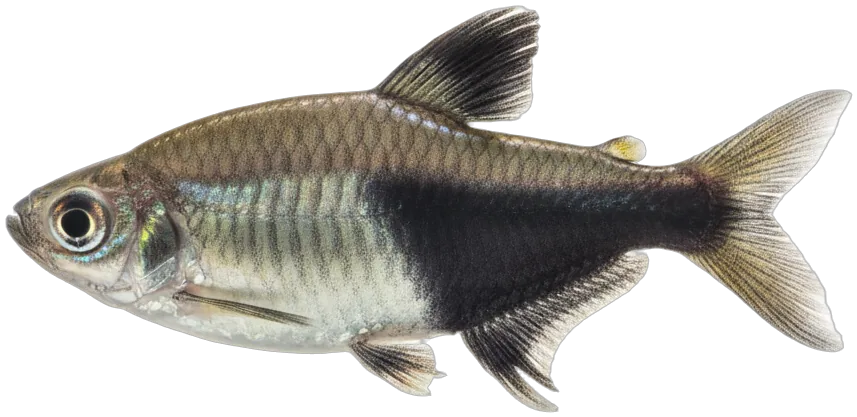
The Black Skirt Tetra is a favorite community fish from the rivers and streams of South America, especially in Brazil, Bolivia, and Paraguay. It has a tall, diamond-shaped body, and the back half is dark black and fades to silver near the head. Its flowing lower fins look a bit like a swishing skirt, which is how it got its name. As the fish gets older the black color often fades to a softer gray.
These tetras are active, hardy, and easy to care for, which makes them great for beginners. They love to swim together in a loose school, darting around the middle of the tank. When kept in a proper group they are peaceful, but a lonely or crowded tetra can get nippy and bother its tankmates, so numbers matter.
| Care level | Beginner |
| Adult size | 2-3 in (5-7.5 cm) |
| Lifespan | 3-5 years |
| Temperament | Peaceful, but a fin-nipper if kept in too small a group |
| Min. tank | 20 gallons (76 liters) |
| Temperature | 72-80°F (22-27°C) |
| pH | 6.0-7.5 |
| Diet | Omnivore that eats flakes, frozen, and small live foods |
| Schooling | Yes, keep a group of six or more |
Water and tank
Black Skirt Tetras are very adaptable and handle a wide range of water conditions, which is one reason they are so beginner friendly. They like warm water and a gentle current. A group of six or more should have at least a 20 gallon tank so they have room to swim. Keeping the water clean with regular changes keeps their fins healthy and their colors nice.
Aquascape and setup
These tetras feel safest in a tank with plants around the sides and a clear open lane down the middle for swimming. A darker gravel and a few floating plants to soften the light really make their silvery bodies pop. Driftwood and tall plants give them places to dart for cover if they feel startled, which helps them stay calm and confident.
Diet and feeding
Black Skirt Tetras are easygoing omnivores that will happily eat almost anything. A good flake or small pellet makes a fine everyday diet, and treats of frozen or live foods like bloodworms, daphnia, and brine shrimp keep them healthy and colorful. Feed small amounts once or twice a day and only what they can finish in a couple of minutes.
Tankmates and temperament
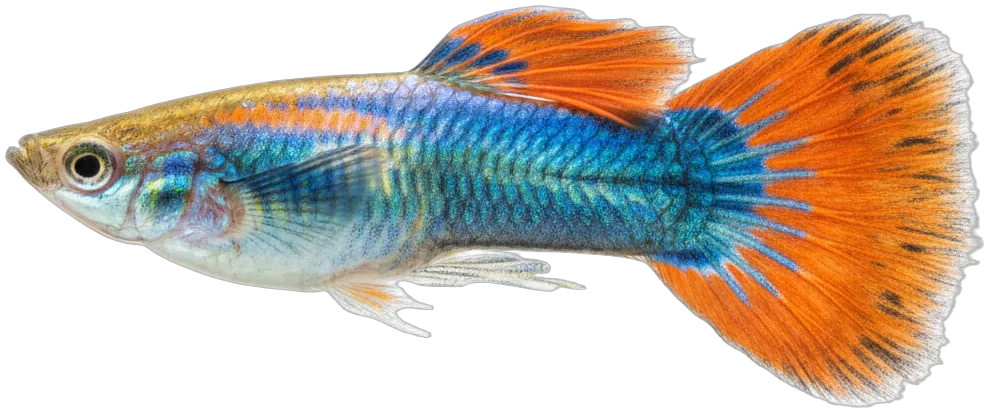
In a proper school of six or more, these tetras are peaceful and mix well with other calm community fish. If only a few are kept, they can become bossy and nip at long, flowing fins, so avoid housing them with slow fish like bettas or fancy guppies. A bigger group spreads out their energy and keeps everyone getting along.
Breeding and eggs
Black Skirt Tetras are egg scatterers, which means the female drops sticky eggs among the plants and does not care for them. The parents will actually eat their own eggs, so breeders move them out after spawning. In a well-planted tank a few fry may survive on their own. The tiny babies grow quickly once they are big enough to eat crushed flakes.
Fun facts
- The 'skirt' in its name comes from the flowing lower fins that swish as it swims.
- Young Black Skirt Tetras are darkest, and the black fades to gray as they get older.
- There is a long-finned version and a golden 'white skirt' version bred by hobbyists.
- Some brightly dyed 'painted' tetras are colored by people, which is unhealthy for the fish.
- They come from the same South American waters as many other popular tetras.
Frequently asked questions
How many Black Skirt Tetras should I keep?
Keep at least six together. In a good-sized group they feel safe, school nicely, and are far less likely to nip at other fish.
Are they fin-nippers?
They can be if kept in too small a group or with slow, long-finned fish. A proper school and active tankmates usually keeps the nipping in check.
Why did my tetra turn gray?
That is normal. Black Skirt Tetras are darkest when young and naturally fade toward gray as they age. It does not mean the fish is sick.
Are dyed or 'painted' tetras okay to buy?
It is best to avoid them. The bright colors are added by people through a harmful process, and the natural black and silver fish are healthier and just as pretty.