Overview
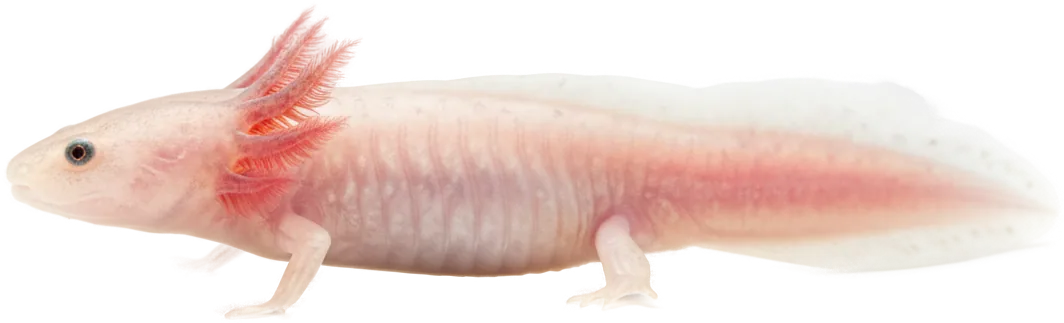
The axolotl is not a fish, even though it lives its whole life underwater. It is a type of salamander, which is an amphibian, and it comes from a small set of lakes and canals near Mexico City. What makes it so unusual is that it stays a baby forever. Most salamanders start life in the water and later crawl onto land as adults, but the axolotl skips that step. It keeps its feathery outside gills and its fin-like tail for life, a special trait scientists call neoteny.
Axolotls come in several colours called morphs. The most common pet axolotl is the leucistic morph, which is pink and pale with dark eyes. There are also wild types that are dark brown or greenish with speckles, golden ones that shine yellow, melanoid ones that are nearly black, and rare copper ones. No matter the colour, they all need the same care: cold, clean water and a calm tank. They are famous for one amazing power, the ability to regrow lost body parts like legs, tail, and even parts of the heart and brain.
| Care level | Easy for a beginner who can keep the water cold |
| Adult size | 9-12 in (23-30 cm) |
| Lifespan | 10-15 years |
| Temperament | Calm and slow, but will eat anything small enough to fit in its mouth |
| Min. tank | 20 gallons (75 liters) for one |
| Temperature | 60-64F (16-18C), no heater |
| pH | 7.4-7.6 |
| Diet | Carnivore (worms and sinking pellets) |
| Habitat | Cool freshwater tank with bare bottom or large stones |
What it is and where it comes from
The axolotl is a critically endangered amphibian that lives naturally in only one place on Earth, the lakes and canals around Mexico City, especially an area called Xochimilco. In the wild there are very few left because of pollution and lost habitat. Luckily, axolotls are common and easy to breed in captivity, so the ones kept as pets are raised by people, never taken from the wild. Remember, an axolotl is a salamander that stays in its water baby form, so please never call it a fish.
Tank and water needs
Cold water is the golden rule. Axolotls are happiest between 60 and 64F (16 to 18C) and should never have a heater. Warm water stresses them and can make them sick. Give a single axolotl at least a 20 gallon (75 liter) tank with a gentle filter, because they do not like strong currents. The most important safety rule is the floor of the tank. Never use small gravel, because an axolotl might swallow it and get a dangerous blockage called impaction. Use a bare bottom or large smooth stones that are too big to swallow.
Diet and feeding
Axolotls are carnivores, which means they only eat meaty food. Good choices are earthworms, blackworms, and special sinking axolotl pellets. They find food mostly by smell and by feeling movement, then open their mouths fast to suck the food in. Feed a young axolotl a little every day and an adult a few times a week. Because they gulp whatever fits in their mouth, keep small fish and small objects out of the tank so they do not swallow the wrong thing.
Behaviour and handling
Axolotls are gentle and a bit clumsy. They walk slowly along the bottom on four little legs and swim by wiggling their tail. Their skin is very soft and delicate and has no scales, so they should almost never be picked up by hand. If an axolotl ever must be moved, an adult should guide it into a soft net or a cup under the water. They are best enjoyed by watching, not touching.
A super healing power
The axolotl is one of the best healers in the whole animal kingdom. If it loses a leg, its tail, or even part of an eye or its heart, it can grow the part back, often good as new with no scar. Scientists all over the world study axolotls to learn how this healing works, hoping it can one day help humans heal better too. That amazing ability, plus their forever-baby look, makes them one of the most special creatures you can keep.
Fun facts
- An axolotl never fully grows up and keeps its feathery gills and tail for its whole life.
- It can regrow lost legs, its tail, and even parts of its heart and brain.
- Axolotls need cold water and no heater, unlike most aquarium animals.
- They come in many colours, including pink leucistic, dark wild type, golden, black melanoid, and copper.
- In the wild they live in only one place on Earth, the lakes near Mexico City, and are critically endangered.
Frequently asked questions
Is an axolotl a fish?
No. An axolotl is a salamander, which is an amphibian. It lives underwater and keeps its gills for life, but it is not a fish.
Do axolotls need a heater?
No, the opposite. They need cool water between 60 and 64F (16 to 18C). A heater can make them too warm and unwell, so keep the water cold and clean.
Can I put gravel in an axolotl tank?
Small gravel is risky because an axolotl may swallow it and get a blockage. Use a bare bottom or stones too large to fit in its mouth.
Is it true they can grow back body parts?
Yes. Axolotls can regrow legs, their tail, and even parts of some organs. Scientists study them to learn how this healing works.
Can axolotls live with fish?
It is not a good idea. Axolotls may try to eat small fish, and some fish nibble their soft gills. They do best kept alone or with other axolotls of similar size.