Overview
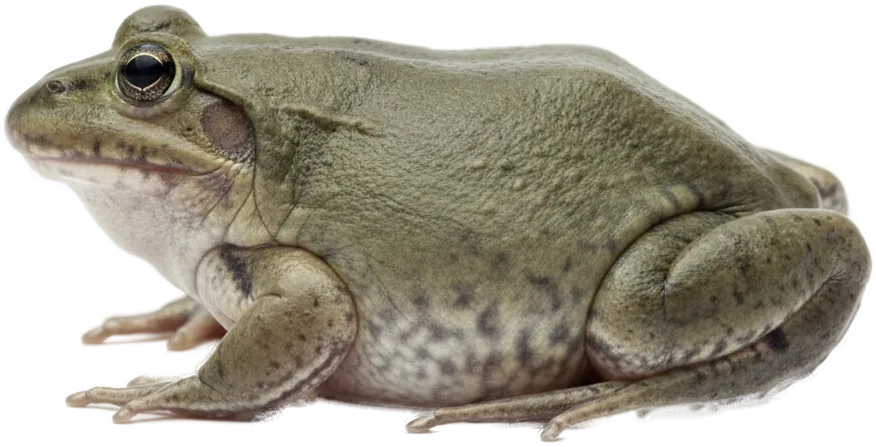
The African clawed frog is a frog that spends almost its entire life underwater. Unlike the frogs you might see hopping around a garden pond, this one is built for swimming, with a flat body, strong back legs, and wide webbed feet. It gets its name from the three small dark claws on each back foot, which it uses to tear food into bite sized pieces. It comes from ponds, rivers, and lakes across parts of Africa.
These frogs are hardy and can live a long time, but they are not gentle community pets. An African clawed frog will eat almost anything it can catch, including small fish, shrimp, and snails. Because of this, it is usually kept alone or with other frogs of the same size, not mixed with a normal fish community. They are strong and can push tank lids open, so their home always needs a secure cover.
| Care level | Easy but needs its own tank |
| Adult size | 4-5 in (10-13 cm) |
| Lifespan | 10-15 years |
| Temperament | Bold and hungry, not safe with small fish |
| Min. tank | 20 gallons (75 liters) |
| Temperature | 68-75F (20-24C) |
| pH | 6.5-7.5 |
| Diet | Carnivore (worms, pellets, and frozen meaty foods) |
| Habitat | Fully aquatic freshwater tank with a secure lid |
What it is and where it comes from
The African clawed frog is a fully aquatic amphibian native to ponds and slow rivers across southern Africa. It has smooth, slippery skin, no tongue, and no visible ears. Instead of a tongue, it uses its front hands and its clawed back feet to stuff food into its mouth. In the wild it can even wriggle across wet ground to find a new pool when its home dries up.
Tank and water needs
Because it lives underwater, this frog needs a proper aquarium, not a land tank. A single frog should have at least a 20 gallon (75 liter) tank with clean, still to gentle water kept between 68 and 75F (20 to 24C). A tight, heavy lid is a must, because these frogs are surprisingly strong and can jump or climb out. Keep the water clean with a gentle filter, since frogs are messy eaters.
Diet and feeding
The African clawed frog is a hungry carnivore. It eats earthworms, bloodworms, frozen meaty foods, and sinking frog or fish pellets. It hunts by smell and by feeling movement in the water, then grabs food with its hands. Do not overfeed, because these frogs will keep eating as long as food is offered. A few good meals a week is plenty for an adult.
Behaviour and handling
This is a bold, active frog that spends its time swimming, resting on the bottom, and hanging near the surface to breathe air. It is not a safe tankmate for small fish, shrimp, or snails, because it will try to eat them. Its skin is soft and coated in slippery slime, so it should not be handled except when an adult needs to move it. Enjoy this frog by watching it swim and hunt.
A frog famous in science
The African clawed frog is one of the most studied animals in the world. For many years scientists used it to learn about how eggs and baby animals grow, and it was even once used as a living pregnancy test long ago. Today it helps researchers study healing and biology. That makes this common tank frog a bit of a science superstar.
Fun facts
- African clawed frogs live almost entirely underwater and are strong swimmers.
- They have three tiny claws on each back foot, which give them their name.
- They have no tongue and use their hands to push food into their mouths.
- They will eat small fish and shrimp, so they are best kept alone or with other big frogs.
- They are one of the most studied frogs in science and can live 10 to 15 years.
Frequently asked questions
Can an African clawed frog live with fish?
Usually not. It will try to eat small fish, shrimp, and snails. It is safest kept alone or with other frogs of similar size.
Does it need land in its tank?
No. This frog is fully aquatic and lives underwater. It only comes to the surface to gulp air, so it needs a water tank, not a land setup.
Why does the tank need such a strong lid?
These frogs are powerful and can push a light cover aside and climb out. A tight, heavy lid keeps them safely in the water.
How is it different from an African dwarf frog?
The clawed frog is much bigger and hungrier, and it has clawed feet. The dwarf frog is tiny, gentle, and has fully webbed fingers. They are easy to mix up, so it helps to check the feet and size.