Overview
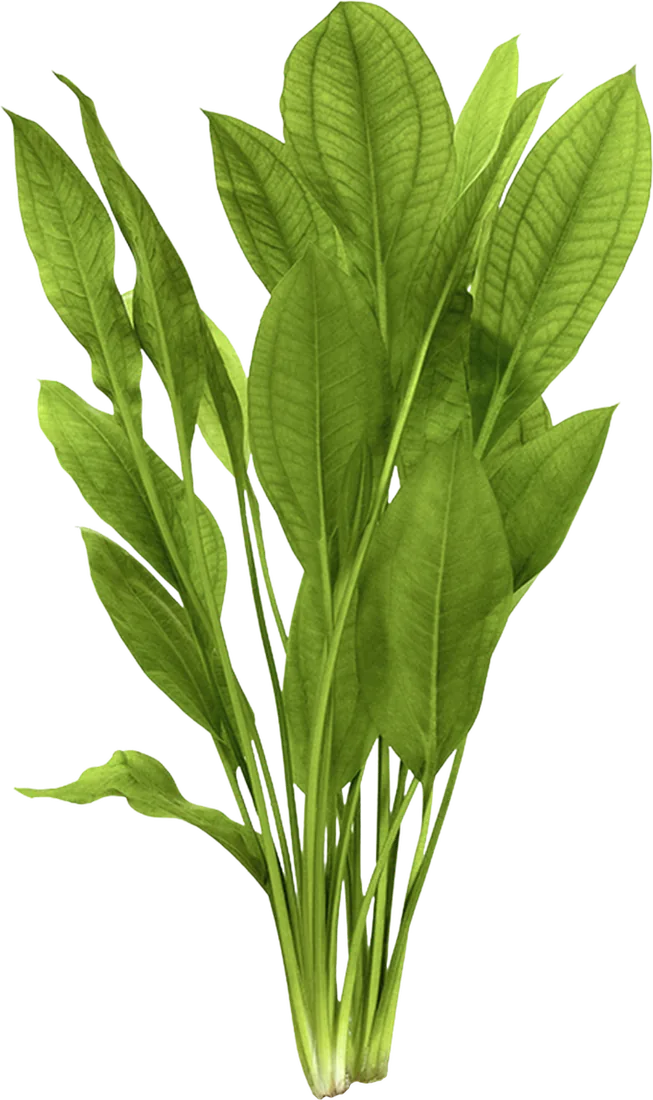
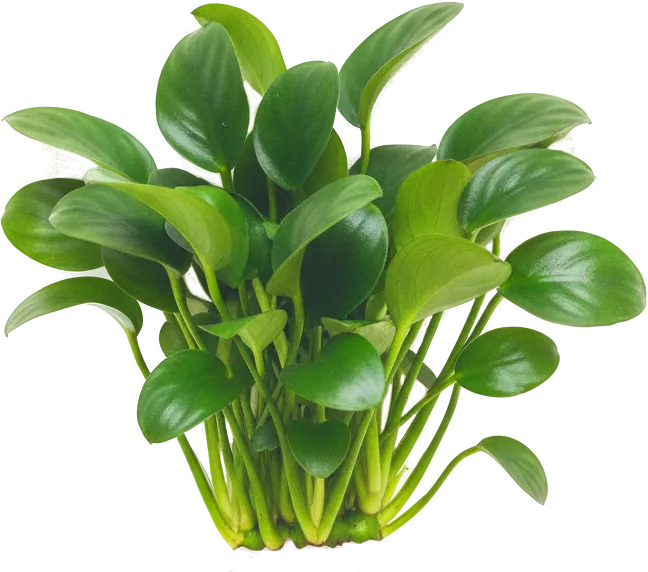
Anubias is a slow-growing West African epiphyte with thick, dark-green, almost plastic-looking leaves. Like Java fern it attaches to hardscape rather than rooting in substrate, and its tough leaves shrug off most fish.
Its slow growth is a feature: it needs almost no trimming, but the same slow metabolism means the old leaves are prone to algae in bright tanks.
| Difficulty | Very easy |
| Light | Low |
| CO2 | Not required |
| Growth rate | Very slow |
| Placement | Foreground / midground on hardscape |
| Max height | 6-16 in (15-40 cm) |
| Feeding | Water column |
| Temperature | 72-82°F (22-28°C) |
| Propagation | Rhizome division |
Light & CO2
Anubias is a low-light plant and prefers shade , under strong light its slow-growing leaves collect algae. No CO2 is required, though it will grow a little faster with it.
Attaching & placement
Never bury the rhizome , attach it to driftwood or rock with thread or gel glue and let the roots grip. It sits beautifully in the shaded foreground or midground, often tucked under taller plants.
Feeding & growth
A water-column feeder that does fine on a general liquid fertiliser. Growth is very slow (a leaf every few weeks), so it needs minimal maintenance; just remove any algae-covered old leaves.
Propagation
Cut the rhizome into sections, each with at least three or four leaves and some roots, and attach them to new hardscape. Anubias also flowers underwater on a slender stalk.
Common problems
'Anubias rot' , a mushy, melting rhizome , is usually from a buried rhizome or damage; keep it exposed. Algae on old leaves is best managed by shading, reducing light duration, and adding grazers.
Fun facts
- Anubias leaves are so tough they can even be kept with plant-eating cichlids and goldfish.
- It flowers underwater, producing a small white spathe on a stalk.
- It is an epiphyte , the rhizome must stay above the substrate.
- Its slow growth means almost zero trimming, but old leaves attract algae in bright tanks.
- Popular varieties include the tiny Anubias nana 'petite'.
Frequently asked questions
Can Anubias grow in low light?
Yes , Anubias is a classic low-light plant and actually prefers shade. Strong light causes algae to build up on its slow-growing leaves.
How do you plant Anubias?
Do not bury the rhizome. Attach it to driftwood or rock with thread or gel superglue and let its roots grip; only the roots should touch the substrate, if any.
Why is my Anubias getting algae on its leaves?
Because it grows so slowly, the old leaves sit long enough to collect algae, especially under bright light. Shade the plant, shorten the light period, and add algae grazers.
How fast does Anubias grow?
Very slowly , often just one new leaf every few weeks. That makes it low-maintenance but also means damaged leaves are slow to replace.
Does Anubias need CO2?
No. It grows without CO2 under low light, though a little CO2 will speed up its otherwise slow growth.